
Imagine This: A Life With Total Discipline
Growth mindset techniques are not just about thinking positive—they’re about transforming how you act every single day.
Imagine waking up every morning with:
- A clear mind
- A defined plan
- The discipline to follow through—no matter what
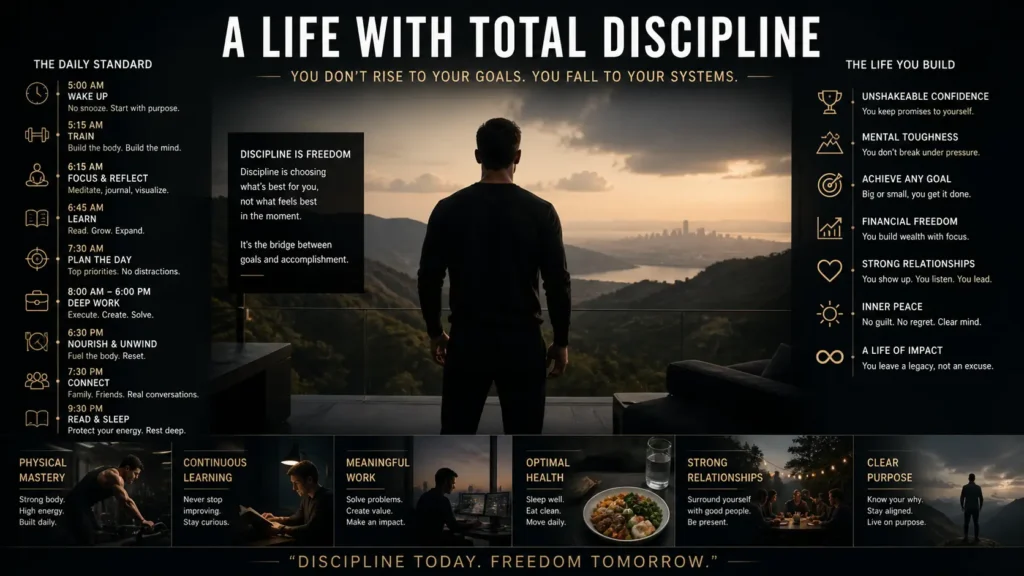
No procrastination.
No distractions.
Just consistent action toward your goals.
Sounds ideal, right?
But here’s the reality:
That level of discipline is not something you’re born with.
It’s something you train.
If you’ve ever:
- Started strong but lost momentum
- Felt motivated for a few days and then gave up
- Struggled to stay consistent
Then this is exactly what you need.
The Question That Changes Everything
Growth mindset techniques start with a question most people avoid answering honestly:
Are you really living the life you once imagined?
Take a moment. Think about it.
Have you ever felt like you could do much more in life… but somehow held yourself back?
Maybe because of fear.
Maybe because of what others might say.
Or maybe because of your own thoughts.
There’s always that inner voice saying:
“Don’t take the risk. What if you fail?”
And because of that voice, people delay their dreams—not once, but repeatedly.
Now here’s the uncomfortable truth:
If nothing changes today, your life five years from now may look exactly the same—
same goals, same doubts, same regrets.
That’s where mindset comes in.
Why Motivation Fails (And Discipline Wins Every Time)
Most people think they need more motivation.
That’s the mistake.
Motivation feels powerful—but it’s temporary.
You’ve felt it:
- You set a goal
- You feel excited
- You go all in for a few days
And then…
You stop.
Why?
Because motivation depends on how you feel in the moment.
And feelings change.
Discipline Works Differently
Discipline doesn’t care about your mood.
It shows up:
- When you’re tired
- When you’re not in the mood
- When distractions are everywhere
This is what separates people who dream from people who achieve.
Real success isn’t about working hard when you feel inspired.
It’s about showing up every single day—no matter what.
The System That Changes Everything: Lotus Method
Now comes the real solution.
If you want to:
- Build discipline
- Train your brain for discipline
- Stay consistent long-term
You need a system.
That system is called the Lotus Method.
🌸 Why the Lotus?
The lotus flower grows in muddy water.
But it doesn’t stay stuck there.
It rises above—clean, strong, and untouched.
That’s exactly how discipline works.
No matter how chaotic your environment is:
- Distractions
- Temptations
- Bad habits
You train yourself to rise above them.
The 4 Stages of the Lotus Method (Overview)
This method is built on four powerful stages:
1. Root → Build your mental foundation
2. Stem → Strengthen your self-control
3. Bloom → Master deep focus
4. Thrive → Sustain long-term discipline
Each stage is simple—but extremely effective when applied consistently.
Why This Method Works (Psychology Behind It)
Most people fail because they try to:
- Change everything at once
- Rely on willpower
- Ignore their environment
This method fixes that.
It focuses on:
- Small habit building
- Environment control
- Identity transformation
This is how you:
- Build mental discipline daily
- Eliminate bad habits
- Create long-term consistency
The Truth You Need to Accept
If you want real change, understand this:
👉 Discipline is not optional
👉 Consistency is everything
👉 Feelings don’t matter—actions do
You don’t need:
- More motivation
- More inspiration
You need structure.
And that’s what you’re about to build.
What’s Coming Next
In the next section, you’ll learn:
- How to build discipline from scratch
- How to eliminate distractions permanently
- Powerful self control techniques
- How to stay consistent even when you don’t feel like it
And most importantly—
You’ll learn how to train your brain for discipline using a system that actually works.
🔥 Quick Action Step (Start Now)
Before moving ahead, do this:
Ask yourself one simple question:
👉 “What is one habit I need to fix right now?”
That’s where your transformation begins.
Why Mindset Matters More Than Talent
Most people believe success depends on talent, luck, or resources.
But reality works differently.
Two people can face the same situation:
One gives up.
The other grows stronger and moves forward.
The difference is not the situation.
It’s the way they think.
Your mindset shapes:
- How you react to failure
- How you handle fear
- How far you’re willing to go
And the most powerful realization?
You are not stuck with your current mindset.
You can train it.
You can rebuild it.
You can strengthen it.
Why Most People Struggle to Stay Consistent (Motivation vs Discipline)
After understanding the basics, the next step in applying growth mindset techniques is recognizing one critical mistake: relying on motivation.
Most people don’t fail because they lack goals.
They fail because they depend on a feeling that doesn’t last.
You’ve probably experienced this pattern:
- You feel excited about a new goal
- You start strong for a few days
- Then suddenly, you don’t feel like doing it anymore
This is where consistency breaks.
Motivation Is Temporary
Motivation works like a spark.
It gives you a quick burst of energy—but fades just as fast.
It depends on:
- Your mood
- Your energy level
- Your environment
That’s why even the most driven people lose momentum.
Discipline Is What Actually Works
If you truly want to build mental discipline daily, you need to understand this:
Discipline doesn’t care how you feel.
It pushes you to act:
- On low-energy days
- When distractions are everywhere
- When you feel like quitting
This is the foundation of how to stay consistent.
Success is not built on days when you feel motivated.
It’s built on days when you don’t feel like doing anything—but still show up.
The Real Shift: From Feeling-Based Action to System-Based Action
Here’s the mindset shift that changes everything:
👉 Stop asking: “Do I feel like doing this?”
👉 Start asking: “What needs to be done?”
This is where train your brain for discipline becomes real.
Instead of reacting emotionally, you act intentionally.
Why You Lose Momentum (And How to Fix It)
Let’s break it down simply.
You lose consistency because:
- You chase excitement instead of structure
- You depend on motivation instead of systems
- You expect instant results
To fix this, you need:
- A repeatable system
- Small daily actions
- Clear structure
This is exactly what strong self control techniques are built on.
The Truth About Discipline Most People Ignore
Here’s something most people don’t want to accept:
👉 You will not always feel ready
👉 You will not always feel motivated
👉 You will not always feel confident
And that’s normal.
Discipline is not about feeling strong.
It’s about acting even when you feel weak.
Practical Shift You Can Apply Today
If you want to start applying growth mindset techniques immediately, do this:
Next time you don’t feel like doing something important:
- Pause for a second
- Don’t overthink
- Take action anyway
This simple shift starts building:
- Consistency
- Control
- Momentum
Why This Step Matters Before Moving Forward
Before you jump into advanced strategies like:
- time blocking productivity
- delayed gratification habits
- deep work focus techniques
You need this foundation.
Because without discipline:
- Systems don’t work
- Plans fail
- Goals stay incomplete
🔑 Key Takeaway
Motivation starts the journey.
Discipline finishes it.
And if you can master this one principle, you’re already ahead of most people.
The Hidden Barrier: Your Own Thinking
The biggest limitation in most lives isn’t lack of opportunity.
It’s hesitation.
It’s overthinking.
It’s self-doubt.
It’s the habit of waiting for the “right time.”
Many people stop before they even begin—just because they imagine failure.
But the truth is simple:
Failure is not what stops people.
Fear of failure does.
And until you change that pattern, nothing else changes.
What This Guide Will Actually Help You Do
This is not just motivation.
This guide is designed to help you:
- Understand how to develop a growth mindset
- Break negative thinking patterns
- Build an unbreakable success mindset
- Take practical steps toward a clear life purpose
You won’t just read ideas—you’ll learn how to apply them.
Because real change doesn’t happen by listening.
It happens by doing.
The Lotus Method Explained: A Practical System to Train Your Brain for Discipline
By this point, you already understand that discipline is not something you’re born with—it’s something you train. If you’ve ever felt like you start strong but lose momentum, this is exactly where most people fail. Not because they lack potential, but because they don’t have a system.
That’s where the Lotus Method becomes powerful.
This method is inspired by how a lotus flower grows. It rises from muddy water, untouched by the chaos around it. In the same way, you can train your mind to stay focused and disciplined—no matter how many distractions, temptations, or challenges surround you.
This is not theory. It’s a step-by-step structure you can apply immediately to build mental discipline daily.
Stage 1: Root — Building a Strong Mental Foundation
Every result starts with a foundation. If your base is weak, your discipline won’t last.
The first step is clarity. Ask yourself honestly:
Why do you want to build discipline?
If your reason is weak, your consistency will break the moment things get hard. But when your purpose is clear—whether it’s improving your life, achieving financial freedom, or becoming mentally stronger—it anchors you.
Next comes your environment.
Most people think discipline is about willpower. It’s not. Your surroundings shape your behavior more than your intentions. If your phone is always within reach, distractions will win. If unhealthy habits are easily accessible, you’ll fall back into them.
So instead of fighting temptation, remove it.
This is one of the simplest yet most effective self control techniques:
- Keep distractions out of sight
- Design your space for focus
- Make good habits easier than bad ones
Finally, start small.
You don’t need to change your entire life overnight. That’s where most people fail. Instead:
- Wake up 10 minutes earlier
- Do one small workout
- Read for 5 minutes
These small wins build momentum. Over time, they turn into identity-based habits—where discipline becomes who you are, not something you try to do.
Stage 2: Stem — Strengthening Your Self-Control
Once your foundation is set, the next step is control.
Life won’t become easier. Distractions won’t disappear. But your ability to stay focused will improve.
Think of it like this: just like a lotus grows tall in muddy water, your self-control must stay strong even in chaos.
One of the most effective ways to train your brain for discipline is the 5-second rule.
Whenever you hesitate—whether it’s getting out of bed, starting work, or avoiding distractions—count:
5… 4… 3… 2… 1… GO
This interrupts overthinking and forces action.
Another powerful habit is delayed gratification.
Most people are wired for instant rewards:
- Checking the phone immediately
- Eating junk food instantly
- Avoiding hard tasks
But discipline is built when you delay that reward.
Instead:
- Wait before checking notifications
- Delay cravings
- Choose long-term results over short-term comfort
The more you practice this, the stronger your discipline becomes.
This is how you eliminate bad habits—not by fighting them aggressively, but by retraining your brain to wait.
Why Most People Fail at Consistency
Here’s the truth most people don’t want to hear:
They rely on motivation.
Motivation feels exciting, but it fades. Discipline doesn’t depend on how you feel. It depends on what you do—especially on the days you don’t feel like doing anything.
That’s why people:
- Start strong
- Lose momentum
- Quit halfway
But when you apply structured growth mindset techniques like the Lotus Method, you stop depending on emotions.
You start depending on systems.
And systems are what create real, lasting change.
A Small Shift That Starts Big Change
Everything begins with one decision:
To stop postponing your life.
To stop listening to the voice that holds you back.
And to start asking a better question:
“What can I become if I don’t quit this time?”
That question alone can change your direction.
And in the next part, you’ll see exactly how to turn that shift into real, daily action.
The Power of Mindset: Why Some People Rise While Others Stay Stuck
At some point, almost everyone feels it—
A quiet emptiness.
Sometimes you have everything… yet something feels missing.
And sometimes people have nothing… yet they keep moving forward with a smile.
So what creates this difference?
It’s not luck.
It’s not background.
It’s mindset.
The same difficulty can break one person…
and become a turning point for another.
Some people stop the moment they imagine failure.
Others use failure to discover their strength.
That’s the real difference.
Deep Focus and Long-Term Discipline: Turning Effort Into Identity
Once you’ve built your foundation and strengthened your self-control, the next step is where real transformation happens—focus and sustainability.
Most people know what to do. Very few can stay consistent long enough to see results.
This is where advanced growth mindset techniques start shaping your daily behavior.
Stage 3: Bloom — Mastering Deep Work and Focus
A lotus doesn’t bloom randomly—it blooms when it reaches the surface. In the same way, your results appear when your focus becomes sharp and uninterrupted.
If you struggle with distractions, you’re not alone. The modern world is designed to break your attention. That’s why you need structured deep work focus techniques.
One of the most effective methods is time blocking productivity.
Instead of working “whenever you feel like it,” assign fixed time slots:
- 9:00–11:00 AM → Deep work (no distractions)
- 11:30–12:00 PM → Break / light tasks
- 2:00–4:00 PM → Focused execution
During these blocks:
- Turn off notifications
- Keep your phone away
- Work on one task only
This approach is backed by research on deep focus by experts like Cal Newport, who explains that uninterrupted concentration is the key to high performance. You can explore his ideas further through Deep Work.
Here’s the truth:
Discipline grows when you protect your attention.
Stage 4: Thrive — Making Discipline a Lifestyle
Reaching focus is powerful. Maintaining it is what separates average from exceptional.
A lotus doesn’t just bloom once—it keeps thriving. Your discipline should work the same way.
The first step is tracking progress.
You don’t need anything complex:
- Use a notebook or an app
- Track your daily habits
- Note where you stayed consistent
Even if you miss a day, don’t let it turn into two. The goal is not perfection—it’s recovery.
This concept aligns with behavior research shared by James Clear, who emphasizes that small daily actions shape long-term identity. His book Atomic Habits explains how consistency compounds over time.
Identity Shift: The Real Secret Behind Consistency
Most people say:
“I want to be disciplined.”
That’s the wrong approach.
Instead, say:
“I am a disciplined person.”
This is called identity based habits, and it’s one of the most powerful growth mindset techniques you can apply.
When your identity changes:
- Your actions follow automatically
- Your decisions become easier
- Your consistency improves naturally
You stop forcing discipline—and start living it.
The 7-Day Action Plan to Build Mental Discipline Daily
Now it’s time to apply everything.
Pick one habit:
- Waking up early
- Reading daily
- Working out consistently
Then follow this structure for 7 days:
- Build clarity (why it matters)
- Remove distractions
- Start small
- Use the 5-second rule
- Practice delayed gratification
- Apply time blocking
- Track your progress daily
This simple system helps you build mental discipline daily without overwhelm.
Here’s the reality:
You don’t become disciplined in one big moment.
You become disciplined through small, repeated actions.
That’s how you train your brain for discipline, eliminate bad habits, and finally learn how to stay consistent—even when motivation disappears.
How Your Thinking Shapes Your Entire Life
Your mindset is not just about motivation.
It quietly controls every part of your life:
- Your career decisions
- Your financial growth
- Your relationships
- Even how much you respect yourself
Most people don’t realize this.
They try to change results without changing thinking.
But results don’t change until thinking does.
A strong mindset doesn’t mean problems disappear.
It means your way of looking at problems changes.
Instead of asking:
“Why is this happening to me?”
You start asking:
“What is this trying to teach me?”
That one shift changes everything.
Growth Mindset Techniques: Turning Setbacks Into New Beginnings
Imagine building something with your full heart—your identity, your dream—and one day, it’s taken away from you.
That’s exactly what happened to Steve Jobs.
Being removed from his own company could have broken him. Most people would have seen it as the end. But he didn’t.
He refused to treat that moment as the final chapter.
Instead, he used that emptiness as space for a new beginning. Later, he described that period as one of the most creative phases of his life.
Years later, he returned—stronger, sharper, and more impactful.
Lesson: Not every fall is failure. Sometimes, it’s preparation.
Staying Consistent When It Gets Hard: Turning Discipline Into Daily Action
At this stage, you understand the system. But here’s where most people still struggle—execution when things don’t feel easy.
Because the truth is simple:
The real test of discipline begins when you feel like quitting.
You will have days where:
- You feel tired
- You lose focus
- You want to go back to old habits
And that’s normal.
The difference is not in avoiding these moments—but in how you respond to them.
The Real Meaning of Mental Strength and Consistency
A strong mindset is not about never falling. It’s about getting back up every single time.
There will be moments when:
- You feel like stopping
- You lose momentum
- You doubt yourself
But discipline means continuing anyway.
This is where growth mindset techniques become practical, not theoretical.
Instead of thinking:
“I failed.”
You shift to:
“What did this teach me?”
This small change is how you build mental discipline daily.
Even historically, people like Thomas Edison didn’t see failure as defeat. Every failed attempt was simply feedback—one more step toward success.
Control Your Inner Voice to Eliminate Bad Habits
Most people try to fix their actions without fixing their thoughts.
But your inner dialogue controls everything.
When things go wrong, your mind might say:
- “I can’t do this”
- “I’m not built for this”
If you listen to that voice, it becomes your reality.
Instead, replace it with:
- “This is just a lesson”
- “I’ll improve next time”
- “I’ll try again”
This is one of the most powerful ways to eliminate bad habits and rewire your thinking.
Break Big Goals Into Small Daily Wins
One major reason people fail is overwhelm.
Big goals feel heavy. They create pressure.
So instead of chasing perfection, focus on small progress.
For example:
- Instead of “I’ll transform my life,” → “I’ll improve 1% today”
- Instead of “I’ll work 5 hours,” → “I’ll complete one focused task”
This is how you learn how to stay consistent without burnout.
It’s the same principle used by Michael Jordan—focusing on daily practice, small improvements, and repetition.
Over time, small efforts compound into massive results.
Your Environment Shapes Your Discipline
You don’t build discipline in isolation. Your environment either supports you or destroys your focus.
Look around:
- Are you surrounded by distractions?
- Do people around you encourage growth or mock effort?
Because your environment slowly becomes your mindset.
To stay consistent:
- Spend time with growth-focused people
- Reduce exposure to negativity
- Design your space for focus
The Power of Daily Action and Patience
Here’s something most people underestimate:
Big success is built on small daily actions.
Not one big breakthrough. Not one perfect day.
Just:
- Showing up
- Doing the work
- Repeating it
Every. Single. Day.
This is how you truly train your brain for discipline.
Even if progress feels slow, it’s still progress.
Because discipline is not built in one decision.
It’s built in daily choices.
And remember this:
You don’t lose when you fail.
You lose when you stop showing up.
So the next time you feel like quitting, ask yourself one question:
“Am I really going to give up on my goals this easily?”
That question alone can bring you back on track—and keep your momentum alive.
Growth Mindset Techniques: The Battle Inside Your Mind
There’s a simple but powerful idea:
Inside you, there are always two forces.
One is built on fear, doubt, and insecurity.
The other is built on courage, belief, and growth.
The question is not which one exists.
The real question is—which one are you feeding daily?
Because whatever voice you listen to consistently… becomes your reality.
This is why some people stay stuck.
They believe they are fixed, limited, and incapable of change.
Challenges feel like threats.
Criticism feels like attack.
But people with a growth mindset see things differently.
They believe they can improve.
They see mistakes as feedback.
They treat discomfort as part of growth.
Learning From Rejection Instead of Avoiding It
When Michael Jordan was cut from his school team, he had two choices:
Believe he wasn’t good enough…
or believe he wasn’t ready yet.
He chose the second.
Instead of quitting, he started working—daily, consistently, relentlessly. One improvement at a time.
That’s what made him legendary.
The same pattern repeats everywhere.
Colonel Sanders faced rejection after rejection while trying to sell his recipe. At an age when most people stop, he started again.
If he had believed “it’s too late,” his story would have ended before it began.
Rewriting Your Inner Dialogue
Your life is not controlled by what happens outside.
It is controlled by what you tell yourself about what happens.
Most people have an inner voice that says:
- “I can’t do this”
- “I’m not made for this”
- “This is too difficult”
But here’s the shift:
Replace that voice with something slightly different:
- “I can’t do this yet”
- “What can I learn from this?”
- “How can I improve next time?”
This small change rewires your thinking.
For example:
If you fail an exam, you have two options—
Blame yourself and feel defeated…
or ask, “Where did I go wrong, and how do I fix it?”
One mindset breaks you.
The other prepares you.
Growth Mindset Techniques: Turning Challenges Into Training Grounds
When something difficult appears, your first instinct is to avoid it.
Your mind says: “This is too hard.”
But a growth mindset asks a different question:
“What can this teach me?”
That shift turns problems into practice.
A tough project at work? → A skill-building opportunity
A rejection? → A direction correction
A failure? → A feedback system
This is how ordinary situations create extraordinary growth.
Growth Mindset Techniques: The Power of Small Daily Improvements
People often chase big results.
But real transformation doesn’t happen in one big leap.
It happens through small, consistent actions.
One small improvement every day.
One lesson learned from each mistake.
One step forward—even when it feels slow.
Over time, these small actions compound into massive change.
This is exactly how great individuals are built—not overnight, but over time.
Growth Mindset Techniques: Choosing Growth Over Comfort Every Day
At the core, mindset is a daily choice.
Every day, you decide:
- Stay comfortable or grow
- Avoid or face
- Quit or continue
People who change their lives don’t make one big decision.
They make one small decision—every single day:
“Today, I choose growth.”
And that consistency is what builds an unbreakable mindset.
Growth Mindset Techniques: Visualization and the Power of the Subconscious Mind
There’s a hidden force most people underestimate—your imagination.
It may feel like just “thinking”… but when used correctly, it becomes a powerful tool for transformation.
This is where growth mindset techniques go deeper—into your subconscious.
When you repeatedly imagine a future version of yourself, your mind starts treating it as a possible reality.
You don’t just wish for change.
You start preparing for it.
This concept is widely backed in psychology, including research from American Psychological Association, which explains how mental rehearsal can influence behavior and performance.
How to Train Your Subconscious Mind Daily
Your subconscious mind doesn’t understand logic—it understands repetition and emotion.
So when you:
- Visualize your goals clearly
- Feel the emotions connected to them
- Repeat that process daily
Your internal system starts aligning your actions with that vision.
For example:
If you constantly see yourself as confident, calm, and in control—
your decisions slowly begin to match that identity.
This is exactly how you train your subconscious mind.
The Jim Carrey Visualization Method
Jim Carrey once had nothing—no money, no recognition, no support.
But he had clarity.
He wrote himself a cheque for millions and kept it as a reminder of where he was going.
This wasn’t blind belief.
It was focused direction.
He combined:
- Clear vision
- Emotional connection
- Consistent effort
And over time, that vision became reality.
Growth Mindset Techniques: Why Visualization Alone Is Not Enough
Let’s be clear—visualization is powerful, but it’s not magic.
Just thinking about success won’t give you results.
Visualization shows the path.
Action moves you forward.
This is where most people fail.
They imagine success… but don’t act on it.
Real transformation happens when both align:
- Vision + Action
- Thought + Effort
When these work together, progress becomes inevitable.
Growth Mindset Techniques: Build Mental Strength Through Daily Practice
A strong mindset is not built in comfort.
It is built in moments when:
- You feel like quitting
- You feel tired
- You feel uncertain
Those are the real testing points.
Resilience doesn’t mean you don’t feel pain.
It means you keep moving despite it.
How to Build Mental Strength Daily
You don’t need extreme routines.
You need consistency.
Start with:
- Doing one difficult task daily
- Pushing slightly beyond comfort
- Finishing what you start
Each small action builds psychological strength.
This is how you build mental strength daily—not through motivation, but through discipline.
Growth Mindset Techniques: The Reality of Struggle and Persistence
Let’s remove the illusion:
The path to success is not smooth.
You will fall.
You will feel exhausted.
You will want to stop.
And that’s normal.
The difference is not whether you struggle.
The difference is whether you continue.
Look at Thomas Edison.
Thousands of failures—but not once did he say, “I’m done.”
For him, every failure was simply:
One more way that didn’t work.
That mindset is rare—but it’s learnable.
Growth Mindset Techniques: Resilience—The Core of an Unbreakable Mindset
A powerful mindset is not defined by never falling.
It is defined by always rising.
Look again at Michael Jordan.
Rejection didn’t define him.
It refined him.
He practiced. Improved. Repeated.
That’s resilience.
And resilience is what builds an unbreakable success mindset.
Growth Mindset Techniques: Turn Pain Into Progress
Every difficult moment carries a question:
“Will you stop here… or grow from this?”
Instead of asking:
“Why is this happening to me?”
Start asking:
“What is this teaching me?”
That shift alone changes your direction.
Because growth is not about avoiding pain.
It’s about using pain as fuel.
Growth Mindset Techniques: Rewiring Your Inner Voice for Lasting Change
At the core of every transformation is one thing most people ignore—
how you talk to yourself.
Your inner voice is constantly running in the background:
- “I’m not good enough”
- “This isn’t for me”
- “I’ll probably fail again”
Over time, this becomes your identity.
But here’s where growth mindset techniques create real change:
You don’t silence that voice.
You retrain it.
Instead of saying:
“I failed, I’m not capable”
Shift to:
“I failed—what can I learn from this?”
This is how you begin to overcome negative thinking habits—not by force, but by awareness and replacement.
Growth Mindset Techniques: Turning Failure Into Your Greatest Teacher
Most people treat failure as a conclusion.
But people with a growth mindset treat it as data.
Every mistake carries information:
- What didn’t work
- What needs improvement
- What to do differently next time
Think about Thomas Edison again.
He didn’t see thousands of failed attempts as defeat.
He saw them as progress.
This is the mindset shift:
Failure is not your identity.
It’s your teacher.
If you apply this consistently, you naturally start developing an unbreakable success mindset.
Growth Mindset Techniques: Creating a Clear Life Purpose Through Daily Action
Many people feel stuck not because they lack ability…
but because they lack direction.
A clear life purpose is not something you suddenly “find.”
It’s something you build.
Start with this:
Ask yourself daily:
- What kind of person do I want to become?
- What small step can I take today?
Instead of chasing perfection, focus on progress.
Growth Mindset Techniques: Why Your Environment Shapes Your Thinking
You are not thinking in isolation.
Your environment is constantly influencing you.
The people you spend time with…
the conversations you hear…
the energy around you…
All of it slowly shapes your mindset.
If you’re surrounded by:
- Negativity → you doubt yourself
- Growth-focused people → you push yourself
This is why one of the most practical steps in how to develop growth mindset is simple:
Choose your environment carefully.
Be around people who:
- Respect effort
- Support growth
- Challenge you to improve
Because sometimes, confidence is borrowed before it’s built.
Growth Mindset Techniques: Small Daily Actions That Build Mental Strength
Big goals often feel overwhelming.
That’s why most people quit early.
But growth doesn’t come from big actions.
It comes from small, repeated steps.
To build mental strength daily, focus on:
- One difficult task per day
- One improvement in your skill
- One moment where you don’t quit
These actions seem small… but they compound.
Over time, they reshape your identity.
Growth Mindset Techniques: From Thinking to Action
Here’s where everything connects.
You can:
- Understand mindset
- Learn techniques
- Feel motivated
But none of it matters without action.
This is the gap most people never cross.
They think about change…
but don’t act on it.
A growth mindset is not about positive thinking alone.
It’s about:
- Thinking → Acting → Improving → Repeating
That cycle is what transforms you.
Growth Mindset Techniques: The Daily Choice That Defines Your Future
At the end of the day, mindset is not a one-time decision.
It’s a daily choice.
Every day, you decide:
- Stay comfortable or grow
- Avoid or face
- Quit or continue
And these small choices define your future.
You don’t become strong in one moment.
You become strong by choosing growth—again and again.
Visualization, Subconscious Training & Building an Unbreakable Success Mindset
At some point, effort alone stops being enough. You need direction. You need clarity. And most importantly—you need alignment between your conscious actions and your subconscious beliefs.
This is where the deeper layer of growth mindset techniques begins: learning how to train your mind from the inside out.
The Hidden Force: Your Subconscious Mind
Most people underestimate this, but your subconscious mind is constantly shaping your decisions, habits, and reactions.
If you keep telling yourself:
- “I can’t do this”
- “I’m not ready”
- “This is too hard”
Your mind starts treating those thoughts as truth.
But here’s the shift:
When you consciously change your internal dialogue, you begin rewiring your subconscious patterns.
This is the core of the power of autosuggestion.
Instead of:
- “I failed”
You say:
- “This attempt showed me what doesn’t work”
That’s not motivation. That’s mental reprogramming.
Visualization: Training Your Mind Before Reality Happens
There’s a reason high performers use visualization. It prepares your brain before action begins.
Take Jim Carrey for example.
Before he became successful, he wrote himself a cheque for $10 million—not because he had it, but because he could clearly see it. He didn’t just think about success. He felt it, repeatedly.
That’s the difference.
When you visualize properly:
- You see yourself succeeding
- You feel the confidence
- You experience the outcome mentally
And slowly, your brain starts treating it as a possible reality, not just imagination.
Simple Night Routine to Train Your Subconscious Mind
You don’t need anything complex. Just consistency.
Every night:
- Sit in silence for a few minutes
- Close your eyes
- Ask yourself: “What do I truly want?”
- Imagine it like a movie
- Focus on the feeling (confidence, peace, success)
Your subconscious understands emotions more than words.
Repeat this daily—and you’ll notice:
- Your thinking shifts
- Your decisions improve
- Your actions align automatically
This is how you build mental strength daily without forcing it.
Why Visualization Alone Is Not Enough
Let’s be clear—thinking doesn’t create results. Action does.
Visualization only shows the path.
You still have to walk it.
The real power comes when:
- Vision (clarity)
- Action (effort)
…move in the same direction.
That’s when things start accelerating.
The Truth About Big Goals
If you want something meaningful in life, expect:
- Failure
- Exhaustion
- Doubt
These are not signs to stop. They are signs that you’re moving forward.
A strong mindset is not about avoiding difficulty.
It’s about continuing despite it.
Look at Thomas Edison again.
He didn’t treat failure as defeat.
He treated it as data.
Every failed attempt simply told him what didn’t work.
That mindset alone changed the world.
Real Strength: The Ability to Keep Going
True resilience means:
- You feel the pain
- You face the struggle
- And you still move forward
This is what separates average from exceptional.
The same principle applies to Michael Jordan.
He wasn’t successful because he avoided failure.
He became great because he never stopped improving after failure.
How to Build an Unbreakable Success Mindset
Here are simple but powerful steps:
1. Accept Reality, Don’t Deny It
When something goes wrong, don’t ignore it.
Ask: “What is this trying to teach me?”
2. Change Your Inner Voice
Replace:
- “I can’t” → “I’ll learn”
- “I failed” → “I’m improving”
3. Break Big Goals Into Small Steps
Progress feels easier when it’s visible daily.
4. Choose Your Environment Carefully
Surround yourself with people who:
- Support growth
- Respect effort
- Encourage progress
5. Stay Consistent
Small daily actions beat occasional big efforts.
The Final Mindset Shift
At the end of the day, everything comes down to one question:
Will you stop, or will you learn?
Because every single day, you’re making that choice.
- Stay the same
- Or grow
- Delay
- Or act
- Doubt
- Or believe
And remember:
You don’t lose when you fail.
You lose when you stop trying.
A Thought to Carry Forward
What if, instead of asking:
- “What if I fail?”
You start asking:
- “What if I become the person I’m meant to be?”
That single shift can change everything.
Frequently Asked Questions (FAQ)
1. What are the best growth mindset techniques for beginners?
Start simple. Focus on small daily improvements, track your habits, and replace negative self-talk with learning-focused thoughts. Consistency matters more than intensity.
2. How can I train my brain for discipline quickly?
Use practical methods like the 5-second rule, time blocking, and delayed gratification. Remove distractions and take action immediately when you feel resistance.
3. Why do I struggle to stay consistent?
Most people rely on motivation, which fades. Discipline comes from systems, habits, and environment—not feelings. Build routines that work even when you don’t feel motivated.
4. How do I eliminate bad habits effectively?
Don’t fight habits directly. Change your environment, delay impulses, and replace bad habits with better alternatives. Over time, your brain rewires itself.
5. What is the fastest way to build self-control?
Practice delayed gratification daily. Start small—wait before reacting, resist quick rewards, and train your brain to choose long-term benefits.
Conclusion: Discipline Is a Daily Decision
You don’t become disciplined overnight.
You become disciplined by:
- Showing up when you don’t feel like it
- Learning from failure instead of quitting
- Taking small actions every single day
That’s how growth mindset techniques turn into real results.
Remember this:
You won’t always feel motivated.
You won’t always feel ready.
But if you keep going—if you keep choosing progress over comfort—you will build a mindset that doesn’t break.
Start today.
Pick one habit.
Follow the Lotus Method.
Track your progress for the next 7 days.
And most importantly—don’t wait for the perfect moment.
Just begin.