The difference between influence and manipulation is something most people never truly learn, yet it affects nearly every relationship and interaction in life. Many kind and honest individuals often feel used, confused, or emotionally drained without understanding exactly why.
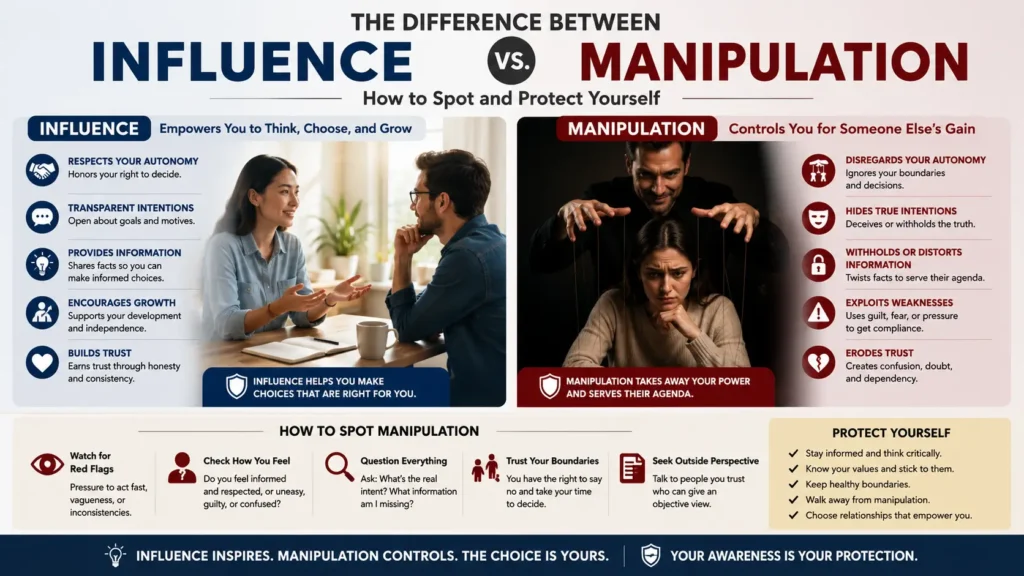
They believe no one can control them, yet they repeatedly find themselves doing things they didn’t want to do — not because of force or threats, but through more subtle means. This is where understanding the difference between influence and manipulation becomes essential.
Why This Distinction Matters
Influence respects your freedom to choose. Manipulation quietly removes or distorts that freedom. One builds trust over time, while the other slowly erodes your confidence and clarity.
Recognizing this difference between influence and manipulation helps you stay aware without becoming cynical. It allows you to maintain healthy relationships while protecting your peace and autonomy.
Why Most People Fail to See the Difference Between Influence and Manipulation
The difference between influence and manipulation is often invisible until you know what to look for. Many people confidently say, “No one can control me,” yet they repeatedly find themselves doing things they didn’t truly want to do. They get used, ignored after helping others, or emotionally drained without understanding how it happened.
This happens because most of us were never taught to recognize subtle control. We were raised with the idea that the world is fair — if you’re good, honest, and hardworking, people will treat you well. But reality works differently. The world runs on perception, power, fear, and desire more than pure morality.
The Harsh Reality Behind Human Behavior
Understanding the difference between influence and manipulation requires seeing people as they actually are, not as we wish them to be. Humans are situational. Someone may be kind and loyal when it benefits them, but quickly change when the balance of power shifts.
This is not about labeling people as good or bad. It’s about awareness. The moment you start seeing how power, fear, and self-interest quietly shape behavior, you stop being blindsided. You begin to notice when someone’s “help” comes with hidden expectations or when kindness is used as a tool for control.
Moving from Blind Trust to Aware Balance
The difference between influence and manipulation becomes life-changing once you accept this reality. You don’t need to become cold or distrustful. You simply need to stop being naive.
True awareness allows you to remain kind while protecting your boundaries. You can still help people, but you do it with open eyes instead of blind hope. This balanced approach is what separates those who repeatedly get used from those who move through life with quiet strength and clarity.
Difference Between Influence and Manipulation: How Power Really Works
The difference between influence and manipulation becomes clearer when you understand how power actually operates in daily life. Power rarely announces itself with loud voices or obvious threats. Instead, it works silently through perception, timing, and emotional control.
True influence respects your ability to choose. Manipulation, however, tries to remove or distort that choice by shaping how you feel and think. This is why some people can walk into a room and change the entire energy without saying much — they understand these hidden dynamics.
Difference Between Influence and Manipulation: Situational Human Nature
A key part of the difference between influence and manipulation is recognizing that humans are situational. People are not always consistently good or bad — they often behave according to what benefits them in a given moment.
Someone may praise you when they need something, then ignore you once their need is fulfilled. They may act loyal when it serves their interest, but quickly change sides when the balance of power shifts. Understanding this situational nature helps you stop taking people’s words at face value and start observing their patterns instead.
Why Good People Often Fall Into Manipulation Traps
Many kind and honest individuals struggle with the difference between influence and manipulation because they assume others will treat them with the same fairness they offer. They help generously, stay loyal, and expect the same in return.
Unfortunately, manipulators exploit exactly these qualities. Your kindness becomes a tool, your empathy becomes a weakness, and your desire to avoid conflict gives them control. Recognizing this pattern is essential if you want to break free from being repeatedly used while still remaining a good person.
Difference Between Influence and Manipulation: Actions vs Words
The difference between influence and manipulation becomes crystal clear when you stop listening only to words and start watching actions. Manipulators are often very skilled with language. They make promises, offer compliments, and say exactly what you want to hear.
However, their behavior over time tells a completely different story. Someone may repeatedly say they care about you, but their actions show disregard for your boundaries or feelings. Influence builds consistency between words and deeds. Manipulation creates a gap that grows wider the longer you ignore it.
Difference Between Influence and Manipulation: The Role of Emotional Control
A major part of the difference between influence and manipulation lies in emotional control. Influence respects your emotions and gives you space to feel and decide. Manipulation uses your emotions as a tool — triggering guilt, fear, urgency, or obligation to push you toward a desired outcome.
When someone makes you feel anxious, guilty, or rushed into decisions, it’s often a sign of manipulation. Learning to pause and observe your emotional state is one of the most effective ways to recognize and break free from these tactics.
Why Awareness Changes Everything
Understanding the difference between influence and manipulation is not about becoming distrustful of everyone. It’s about developing quiet awareness. You can still be kind, empathetic, and open-hearted while protecting your peace and autonomy.
This awareness allows you to respond thoughtfully instead of reacting emotionally. You begin to notice patterns, protect your boundaries, and make decisions based on reality rather than pressure or guilt. This balanced approach is what separates those who are repeatedly used from those who move through life with strength and clarity.
Difference Between Influence and Manipulation: The Power of Emotional Detachment
The difference between influence and manipulation becomes much easier to navigate once you learn emotional detachment. This doesn’t mean becoming cold or uncaring. It means caring without letting your emotions control your decisions.
Manipulators often use your feelings — guilt, fear, obligation, or the need for approval — as leverage. When you practice healthy detachment, you can still feel emotions, but you no longer let them drive your choices. You observe the situation more clearly and respond from a place of strength rather than reaction. This is one of the most effective ways to break free from subtle control.
Difference Between Influence and Manipulation: Why Silence Is Powerful
Another important aspect of the difference between influence and manipulation is understanding the strength of silence. Manipulators thrive on quick reactions and emotional chaos. When you pause before responding — especially in tense or high-pressure moments — you take back control.
Silence creates space for clarity. It prevents you from being rushed into decisions and stops the other person from dictating the pace. Those who master this understand that not every comment needs an immediate reply, and not every situation requires your explanation. This quiet strength is a hallmark of someone who is aware of manipulation tactics.
Developing a Balanced Mindset
The difference between influence and manipulation ultimately comes down to awareness versus ignorance. You don’t need to become distrustful of everyone. Instead, you develop a balanced mindset — one that allows you to remain kind and open while staying observant and grounded.
You learn to see people as they are, not as you hope them to be. You set boundaries without guilt. You respond thoughtfully instead of reacting emotionally. This balanced approach helps you build healthier relationships and protect your peace without losing your humanity.
Difference Between Influence and Manipulation: Developing a Balanced Mindset
The difference between influence and manipulation ultimately comes down to awareness and balance. You don’t need to become cold, suspicious, or ruthless. Instead, you develop a calm, realistic understanding of how people behave and how power works in everyday life.
This balanced mindset allows you to remain kind while staying observant. You can still care about people, but you no longer ignore red flags or give away your power through blind trust. You respond thoughtfully instead of reacting emotionally, and you protect your peace without losing your humanity.
Difference Between Influence and Manipulation: The Power of Silence and Boundaries
One of the strongest tools in understanding the difference between influence and manipulation is learning when to stay silent and when to set firm boundaries. Manipulators often rely on quick reactions, guilt, or urgency. When you pause before responding and hold clear boundaries, you break their pattern and take back control.
Silence is not weakness — it is strength. It creates space for clarity. Boundaries are not rude — they are self-respect. Together, they form a quiet but powerful defense against manipulation.
FAQ – People Also Ask
Q1: What is the main difference between influence and manipulation?
Influence is open and respectful — it lets you make your own choice. Manipulation is hidden and uses emotions, guilt, or pressure to guide your decisions without you fully realizing it.
Q2: How can I tell if someone is manipulating me?
You may feel guilty for no clear reason, notice sudden mood changes, or feel rushed to make decisions. If you often leave interactions feeling confused or drained, it’s usually a sign of manipulation.
Q3: Can good people be manipulators?
Yes. Sometimes people manipulate because they are afraid or insecure, not because they are evil. Awareness helps you respond wisely without becoming bitter.
Q4: How do I set boundaries without feeling guilty?
Remember that protecting your energy is not selfish. Practice saying “No” calmly and without long explanations. Healthy relationships respect boundaries.
Q5: How can I stay kind while protecting myself?
Stay kind with awareness. Care for others, but don’t ignore how their actions make you feel. True kindness includes self-protection.
Final Thoughts
The difference between influence and manipulation is not about becoming distrustful of everyone. It’s about seeing reality clearly while still choosing kindness. Influence builds trust and freedom. Manipulation uses hidden tactics to gain control.
You can be compassionate and strong at the same time. Observe actions more than words. Set boundaries without guilt. Respond thoughtfully instead of reacting emotionally. When you understand these dynamics, you stop being an easy target and start living with greater clarity, confidence, and peace.
Start small. Pay attention to how one person or situation makes you feel this week. Awareness is the beginning of real change.