How to protect yourself from manipulation is a crucial skill in today’s world. Many kind and honest people end up feeling used, drained, or betrayed — not because they are weak, but because they were never taught how manipulation actually operates behind the scenes.
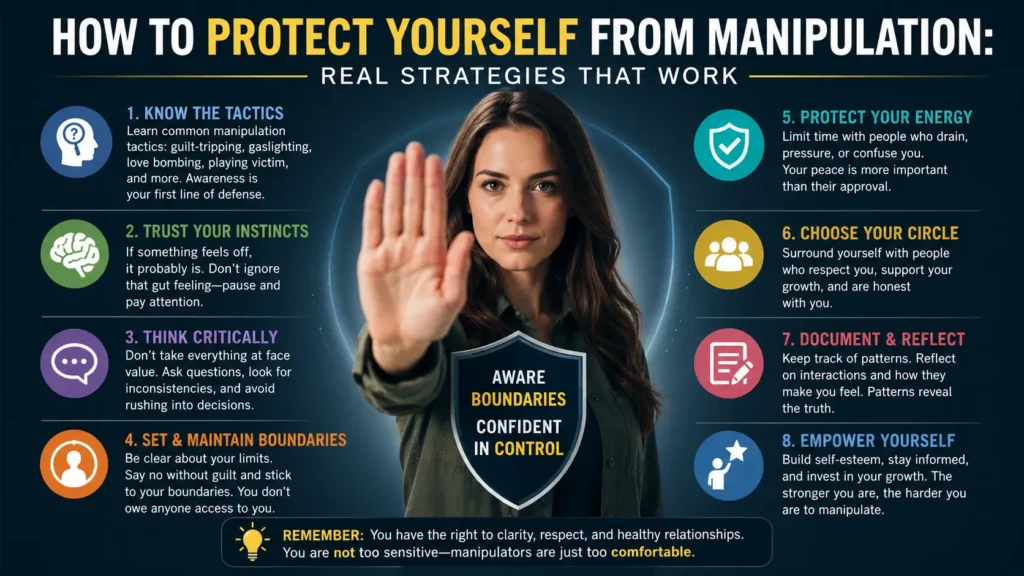
The good news is that you don’t need to become cynical or ruthless. You simply need to become aware. Awareness is the first and strongest defense.
Why Good People Often Get Manipulated
One of the most painful truths is that genuinely good people are often the easiest targets for manipulation. They want to help others, they trust easily, and they avoid conflict. Manipulators recognize these qualities and use them to their advantage.
Understanding how to protect yourself from manipulation starts with accepting that being kind doesn’t mean you have to accept poor treatment. You can remain a good person while having strong boundaries and clear awareness.
The Clear Difference Between Influence and Manipulation
How to protect yourself from manipulation begins with understanding one important distinction: influence and manipulation are not the same.
Influence is open and respectful. It presents information and allows you to make your own choice. Manipulation, on the other hand, is hidden. It uses emotions, guilt, fear, or confusion to guide your decisions without you fully realizing it.
Manipulators rarely show their true intentions. They create situations where you feel obligated, anxious, or unsure, making it harder for you to think clearly. Recognizing this difference is one of the most effective ways to protect yourself from manipulation.
Common Signs You’re Being Manipulated
Learning how to protect yourself from manipulation becomes easier when you can spot the warning signs early. Here are some of the most common red flags:
- You frequently feel guilty for things that aren’t truly your fault.
- The person alternates between excessive praise and sudden coldness, creating an emotional rollercoaster.
- They rush you to make decisions with statements like “You have to decide now.”
- They share only half the story to shape your perception in their favor.
- You start doubting your own memory or judgment after conversations with them (a tactic known as gaslighting).
If these patterns feel familiar, it’s not your imagination. These are classic techniques designed to weaken your confidence and increase their control.
Why Awareness Is Your Strongest Protection
How to protect yourself from manipulation doesn’t require you to become suspicious of everyone. It simply requires awareness. When you understand the tactics, you stop reacting emotionally and start responding thoughtfully.
This awareness allows you to stay calm, set boundaries, and make decisions based on facts rather than pressure or guilt. The goal is not to stop caring about people — it’s to stop being controlled by them.
How to Protect Yourself from Manipulation: Recognizing Emotional Tactics
How to protect yourself from manipulation becomes much easier once you learn to spot the most common emotional tactics. Manipulators rarely use obvious force. Instead, they use subtle psychological tricks that make you question yourself.
One of the clearest signs is the emotional rollercoaster — sudden shifts between excessive praise and cold distance. This creates confusion and makes you work harder for their approval. Another common tactic is urgency: “You have to decide right now” or “If you don’t do this immediately, you’ll lose everything.” Pressure like this is designed to bypass your rational thinking.
How to Protect Yourself from Manipulation: Gaslighting and Guilt
How to protect yourself from manipulation also means recognizing gaslighting — when someone makes you doubt your own memory or perception. Phrases like “That never happened,” “You’re too sensitive,” or “You’re overthinking it” are classic examples.
Guilt is another powerful weapon. Manipulators often twist situations so you feel responsible for their emotions or problems. They may say things like “After everything I’ve done for you…” to make you feel obligated. Learning to separate their emotions from your responsibilities is a key skill in how to protect yourself from manipulation.
The Hidden Half-Truth Strategy
Manipulators rarely tell outright lies. They prefer half-truths — sharing only the part that supports their agenda while hiding important details. This makes their words seem believable while steering you in the direction they want.
How to protect yourself from manipulation requires slowing down and asking questions. When something feels off, give yourself time to think instead of reacting immediately. Clarity is your best defense.
How to Protect Yourself from Manipulation: Observe Actions, Not Words
How to protect yourself from manipulation requires shifting your focus from what people say to what they actually do. Manipulators are often skilled with words — they make promises, offer compliments, and say what you want to hear. But their actions frequently tell a different story.
Look for patterns over time. Someone who repeatedly says they care but consistently disregards your feelings or boundaries is showing you their true priorities. Trusting actions instead of words is one of the most effective ways to protect yourself from manipulation.
How to Protect Yourself from Manipulation: The Power of Emotional Detachment
How to protect yourself from manipulation also involves practicing healthy emotional detachment. This doesn’t mean becoming cold or uncaring. It means caring without becoming emotionally dependent on someone’s approval or reaction.
When you are overly attached to how someone treats you, they gain power over your emotions. Detachment allows you to observe situations more clearly and respond thoughtfully instead of reacting impulsively. It gives you the space to think, “How does this make me feel?” rather than immediately trying to fix or please the other person.
Silence and Delayed Responses as Protection
One of the simplest yet most powerful tools in how to protect yourself from manipulation is learning the value of silence and delayed responses. Manipulators often rely on pressure and urgency to make you decide quickly.
When you pause before replying, especially in emotional or high-pressure situations, you break their rhythm. This small space gives you time to think clearly and respond from a place of strength rather than emotion. Not every comment needs an immediate reply, and not every situation needs your explanation.
How to Protect Yourself from Manipulation in Relationships and Daily Life
How to protect yourself from manipulation becomes especially important in close relationships — whether romantic, family, friendship, or work. Manipulators often hide behind affection, loyalty, or shared history. They may use guilt, emotional withdrawal, or sudden affection to control your behavior.
A key strategy is to observe consistency. Someone who truly cares will respect your boundaries. If you notice frequent guilt trips, silent treatment as punishment, or love-bombing followed by withdrawal, these are strong warning signs. How to protect yourself from manipulation here means recognizing these cycles early and refusing to participate in them.
How to Protect Yourself from Manipulation: Setting Strong Boundaries
How to protect yourself from manipulation heavily relies on clear, consistent boundaries. Many people feel uncomfortable saying “no” because they fear conflict or want to be liked. However, manipulators exploit exactly this discomfort.
Practice stating your limits calmly and firmly without over-explaining. You don’t owe anyone a long justification for protecting your time, energy, or peace. Healthy relationships respect boundaries. Manipulative ones test or ignore them. The more consistently you uphold your boundaries, the less power manipulators have over you.
Developing Awareness Without Becoming Cynical
How to protect yourself from manipulation doesn’t mean you have to become suspicious of everyone. The goal is balanced awareness — seeing people clearly without losing your ability to trust.
Stay kind, but stay observant. Care for others, but don’t ignore red flags. This balanced approach allows you to maintain meaningful connections while protecting yourself from those who intend to use or control you. True strength lies in being open-hearted yet sharp-minded.
How to Protect Yourself from Manipulation: Building a Machiavellian Mindset
How to protect yourself from manipulation doesn’t mean becoming cold or ruthless. It means developing a clear, realistic understanding of how people behave — a balanced Machiavellian mindset. This mindset helps you see situations as they truly are, not as you wish them to be.
It teaches you to observe patterns in behavior, recognize hidden agendas, and respond thoughtfully instead of emotionally. You remain kind, but you stop being naive. You care for people, but you no longer ignore red flags.
How to Protect Yourself from Manipulation in Everyday Life
How to protect yourself from manipulation is most useful in daily situations — at work, in relationships, and within family. In the workplace, pay attention to who controls decisions, who takes credit, and who avoids responsibility. In personal relationships, watch for guilt trips, silent treatment, or sudden emotional shifts used to influence your choices.
The key is consistency. Trust patterns over promises. When someone’s actions don’t match their words repeatedly, believe the actions.
FAQ – People Also Ask
Q1: How do I know if someone is manipulating me? You may feel guilty for no reason, constantly doubt yourself, or notice sudden mood shifts meant to control you. If you feel drained or anxious after interactions, it’s often a sign of manipulation.
Q2: Can good people be manipulators? Yes. Manipulation isn’t always intentional or evil. Sometimes people manipulate because they are afraid, insecure, or want to avoid conflict. Awareness helps you respond wisely without becoming bitter.
Q3: How can I set boundaries without feeling guilty? Remember that protecting your peace is not selfish. Practice saying “No” calmly without long explanations. Healthy relationships respect boundaries; manipulative ones test them.
Q4: Should I confront a manipulator? Not always. Sometimes the best protection is quiet distance and strong boundaries. Confrontation can be useful, but only when you feel safe and emotionally prepared.
Q5: How do I stay kind without being taken advantage of? Be kind with awareness. Give thoughtfully, but never at the cost of your self-respect. True kindness includes self-protection.
Final Thoughts
How to protect yourself from manipulation is ultimately about awareness, boundaries, and emotional balance. You don’t need to become suspicious of everyone — you simply need to see people clearly and trust actions more than words.
Stay kind, but stay observant. Set boundaries without guilt. Respond thoughtfully instead of reacting emotionally. When you understand power dynamics and manipulation tactics, you stop being an easy target and start living with greater peace, confidence, and control.
Start small. Observe one relationship or situation more carefully this week. The more aware you become, the safer and stronger you will feel.