
How to develop positive thinking is a skill that can completely change how you experience life. When responsibilities feel heavy and challenges appear from every direction, some people still manage to stay calm, smile, and keep moving forward. They are not from a different world. The main difference is their perspective. They don’t ignore difficulties — they choose to respond to them with a constructive mindset.
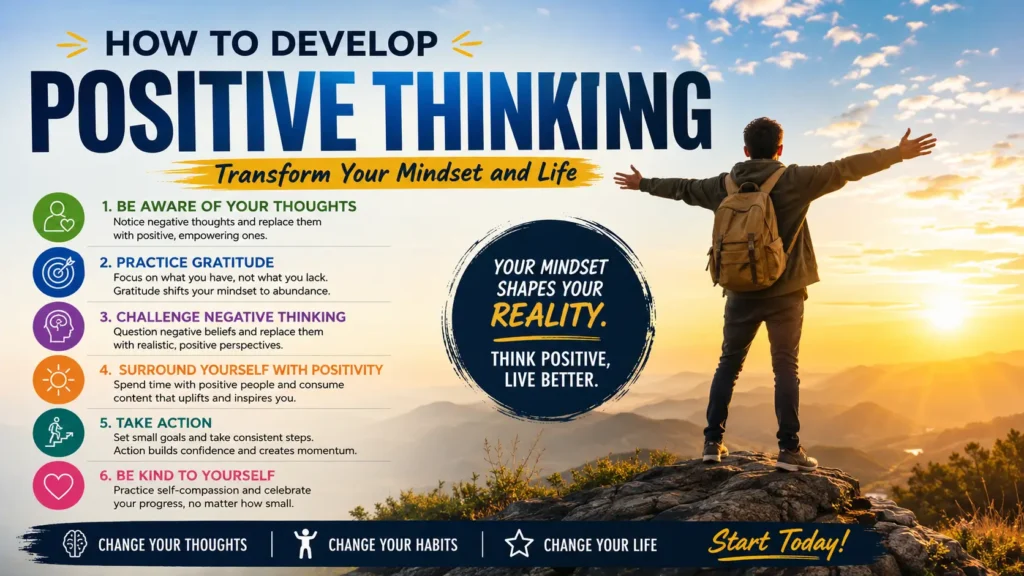
Positive thinking is not magic or wishful thinking. It is a practical mental discipline and a small daily decision about how you choose to see things. When you begin changing your thoughts, the transformation starts from within, and eventually, your entire life begins to shift.
Why Positive Thinking Matters
How to develop positive thinking starts with understanding that your thoughts shape your emotions, actions, and results. People who maintain a positive outlook don’t have easier lives — they simply respond to life’s difficulties in a more empowering way. This single shift in perspective can make a significant difference in your resilience and overall well-being.
How Thoughts Shape Your Reality
How to develop positive thinking starts with a fundamental truth: your thoughts create your inner world, and over time, that inner world shapes your outer reality. A single repeated thought becomes a belief, and beliefs turn into habits that influence your actions and decisions.
If you constantly tell yourself “I always fail” or “Nothing good happens to me,” your mind begins to look for evidence to support that story. On the other hand, when you train yourself to think “I am learning and growing” or “I can handle this,” your brain starts searching for solutions and opportunities. This is why changing your inner dialogue is one of the most powerful steps in how to develop positive thinking.
Breaking Free from Limiting Beliefs
Many of us carry limiting beliefs formed from past experiences, criticism, or failures. These beliefs act like invisible barriers that hold us back. How to develop positive thinking involves recognizing these old stories and consciously rewriting them.
Instead of accepting thoughts like “I’m not good enough,” gently challenge them. Replace them with kinder, more empowering statements. This process doesn’t happen overnight, but with consistent effort, your mind begins to adopt a more supportive and positive perspective.
How to Develop Positive Thinking by Reframing Challenges
How to develop positive thinking becomes truly powerful when you learn to reframe challenges. Instead of seeing every difficulty as a personal failure or roadblock, start asking: What can I learn from this? How can this situation help me grow?
Life will always bring problems, but your perspective decides whether they break you or strengthen you. When you train your mind to look for lessons and possibilities even in tough times, you build real mental resilience. This is one of the most practical ways to develop positive thinking.
How to Develop Positive Thinking Through Gratitude
How to develop positive thinking is greatly accelerated by practicing gratitude daily. Instead of focusing on what’s missing or going wrong, make it a habit to notice and appreciate what is already good in your life.
Every evening, write down three things you’re thankful for — no matter how small. This simple practice trains your brain to scan for positives rather than negatives. Over time, gratitude shifts your entire mindset and makes positive thinking feel more natural.
The Power of Positive Self-Talk
How to develop positive thinking also depends heavily on how you speak to yourself. Harsh inner criticism weakens your confidence, while kind and encouraging self-talk builds it.
Replace thoughts like “I always mess up” with “I am learning and improving.” At first, it may feel awkward, but consistent positive self-talk rewires your brain. Your inner voice becomes a source of strength instead of doubt.
How to Develop Positive Thinking with Visualization
How to develop positive thinking becomes more effective when you use the power of visualization. Your brain finds it difficult to distinguish between a real experience and a vividly imagined one. When you regularly picture yourself succeeding, feeling confident, and handling challenges calmly, your mind starts treating that vision as a real possibility.
Take a few minutes each day to close your eyes and clearly imagine achieving your goals. Feel the emotions — the pride, peace, and satisfaction. This mental rehearsal strengthens your belief and motivates consistent action. Visualization is not daydreaming; it is directed mental training that supports positive thinking.
How to Develop Positive Thinking Through Small Daily Habits
How to develop positive thinking is built through small, consistent daily habits rather than big occasional efforts. Start your morning by saying one empowering statement to yourself. Practice gratitude by noting three things you appreciate. When negative thoughts arise, gently reframe them.
These tiny actions may feel insignificant at first, but they compound over time. Just like physical exercise strengthens your body, regular positive mental habits strengthen your mind. The key is consistency — showing up for yourself every day, even when motivation is low.
Turning Setbacks into Opportunities for Growth
How to develop positive thinking also means changing how you view failures and setbacks. Instead of seeing them as proof that you’re not good enough, treat them as valuable feedback and learning experiences.
Every challenge carries a lesson. When you train your mind to ask “What can I learn here?” instead of “Why does this always happen to me?”, you transform obstacles into stepping stones. This resilient mindset is what separates those who get stuck from those who keep growing.
How to Develop Positive Thinking Through Consistency and Small Wins
How to develop positive thinking is not about sudden dramatic changes. It is built through small, consistent daily actions that gradually rewire your mindset. Celebrating small wins — waking up on time, handling a difficult conversation calmly, or completing a task you’ve been avoiding — strengthens your confidence and reinforces positive thinking.
Consistency matters more than perfection. Some days you’ll feel motivated, other days you won’t. The real progress happens when you continue the practice even on low-motivation days. These repeated small choices create powerful momentum over time.
How to Develop Positive Thinking by Designing Your Environment
How to develop positive thinking is much easier when your surroundings support it. The people you spend time with, the content you consume, and your physical space all influence your thoughts. Surround yourself with encouraging people who uplift you rather than those who constantly complain.
Create a simple positive environment — keep your space organized, add inspiring quotes, reduce negative media consumption, and make time for activities that bring you peace. Your environment silently shapes your mindset every single day.
Building Long-Term Mental Resilience
How to develop positive thinking ultimately leads to greater mental resilience. When you regularly practice reframing challenges, expressing gratitude, and speaking kindly to yourself, you become better equipped to handle life’s ups and downs.
Resilience is not about never facing difficulties — it’s about recovering faster and learning from them. With a positive thinking foundation, setbacks stop feeling like permanent failures and start feeling like temporary lessons that help you grow stronger.
How to Develop Positive Thinking Through Consistent Daily Habits
How to develop positive thinking is not achieved through occasional motivation but through small, consistent daily habits. Start your day with gratitude — thank your body for waking up, appreciate one thing in your life, or repeat a simple empowering statement like “I am capable and I am growing.”
Design your environment to support positivity. Spend time with uplifting people, reduce negative content, and create small reminders like inspiring notes or a clean, peaceful space. These tiny choices compound over time and make positive thinking feel natural instead of forced.
How to Develop Positive Thinking and Build Lasting Resilience
How to develop positive thinking ultimately builds strong mental resilience. Life will always have challenges, but when your default response becomes looking for lessons and possibilities, you recover faster and grow stronger from setbacks.
Remember that positive thinking doesn’t mean ignoring problems. It means choosing to face them with hope, clarity, and self-compassion. Over time, this mindset transforms not just how you think, but how you live.
FAQ – People Also Ask
Q1: How long does it take to develop positive thinking?
Most people notice small improvements in mood and outlook within 2–3 weeks, but lasting change usually takes 2 to 3 months of consistent daily practice.
Q2: Can anyone learn how to develop positive thinking?
Yes. Positive thinking is a skill, not a personality trait. Anyone can improve it with regular practice, even if they’ve been negative for years.
Q3: What is the fastest way to develop positive thinking?
Start with daily gratitude and positive self-talk. Writing down three things you’re thankful for every night is one of the simplest and most effective methods.
Q4: How do I stay positive when life gets really hard?
Focus on small wins, reframe challenges as lessons, and be kind to yourself. Positive thinking during tough times is about progress, not perfection.
Q5: Does positive thinking actually change your life?
Yes. It changes how you respond to situations, which changes your actions, habits, and eventually your results.
Final Thoughts
How to develop positive thinking is a journey of small, daily choices. It starts with awareness of your thoughts, continues with gratitude, positive self-talk, reframing challenges, and consistent habits. Over time, these practices build mental resilience and create a calmer, more empowered way of living.
You don’t need a perfect life to have a positive mind. You only need the willingness to shift how you speak to yourself and how you view your circumstances. Start today with one small change — a grateful thought, a kind word to yourself, or a reframed challenge. Those small steps can lead to big transformations.
You already have everything you need within you. Begin using it.