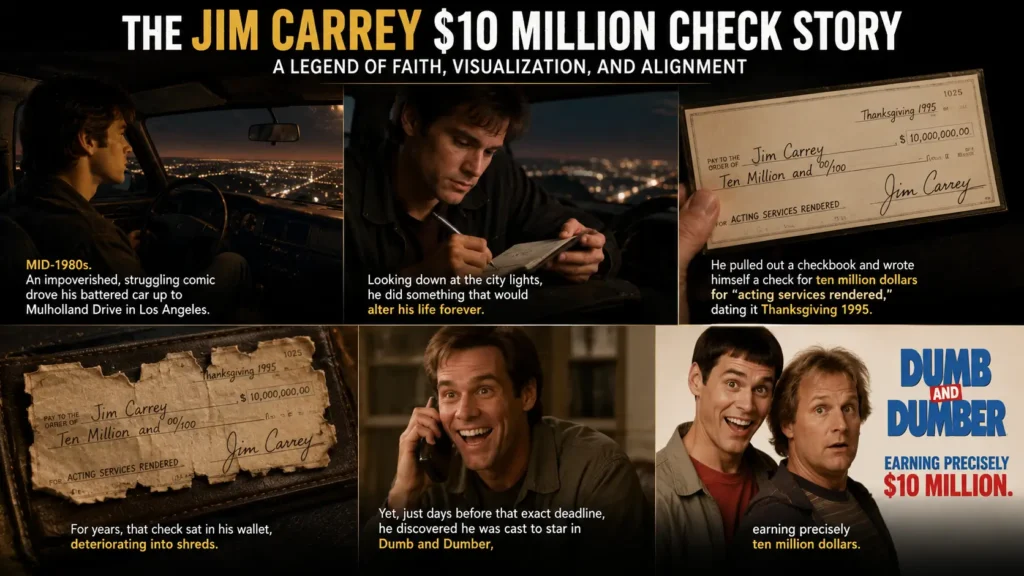
The jim carrey visualization check story is one of the most famous legends in the self-help world. In the mid-1980s, long before he became a household name, an impoverished, struggling comic drove his battered car up to Mulholland Drive in Los Angeles. Looking down at the city lights, he did something that would alter his life forever. He pulled out a checkbook and wrote himself a check for ten million dollars for “acting services rendered,” dating it Thanksgiving 1995. For years, that check sat in his wallet, deteriorating into shreds. Yet, just days before that exact deadline, he discovered he was cast to star in Dumb and Dumber, earning precisely ten million dollars.
While many view this as a magical trick of the universe, modern psychology and neuroscience offer a completely different explanation. This wasn’t mystical sorcery; it was a masterclass in behavioral alignment and cognitive focus. To truly understand how to visualize goals like jim carrey, we have to dismantle the myth and explore how the brain actually processes intense mental imagery.
When analyzing his early struggles, it becomes clear that Carrey faced the same crushing self-doubt and financial anxiety that plagues thousands of aspiring creatives. In 1985, he had nothing. He was completely broke, out of work, and looking for answers in the self-help section of local bookstores. For him, going up to Mulholland Drive every single night wasn’t an exercise in vanity; it was a survival mechanism for emotional regulation. He used visualization to make himself feel better in the present moment, comforting himself with the belief that his successes were already out there in the world, waiting for him to grasp them.
The common pain point for most people trying to emulate this practice is that they focus entirely on the physical check while ignoring the emotional state required to sustain the effort. If you want to know how to do visualization when completely broke, the secret lies in using the practice to lower active stress hormones, which frees up cognitive bandwidth to spot changing market trends and creative opportunities.
Decoding the Psychological Reasons Manifestation Actually Works
There are distinct, evidence-based psychological reasons manifestation actually works, and they have nothing to do with cosmic magic. Psychotherapists define manifestation as a highly structured process of aligning your deepest values, intentions, and daily actions. When Carrey sat on the hood of his car visualizing prominent directors praising his work, he was actively engaging in subconscious priming for goal setting.
By deeply visualizing his ideal future, he was training his mind to focus on specific vocational milestones. This mental preparation directly influenced what is deliberate manifestation alignment—the point where your internal goals perfectly match your external behaviors. He didn’t just sit around wishing for wealth; he systematically conditioned his mindset to accept nothing less than his ultimate objective.
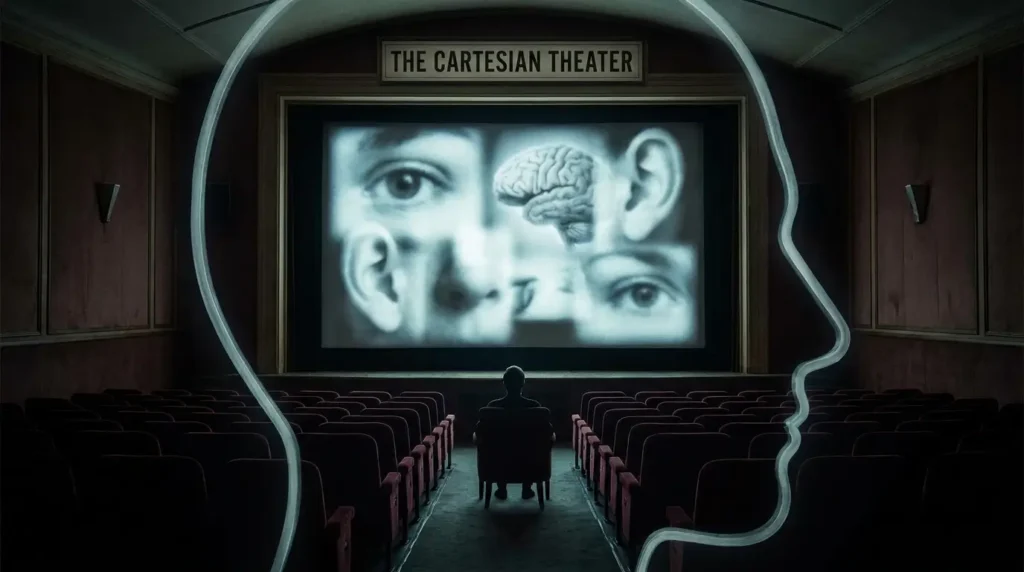
How does the human brain turn an imaginary check into a physical bank deposit? According to neuroscientists, writing a physical note or check primes the brain’s filtering systems.
“When you write down a concrete number and date, you are telling your brain exactly what to prioritize out of the millions of sensory inputs it processes every second.” — Dr. James R. Doty, Neuroscientist
This biological system acts like a customizable search engine. If you don’t prime it with specific intentions, it defaults to scanning for immediate threats or past failures. When you actively utilize an acting services rendered check template, you give your subconscious mind a highly specific target. The brain then actively scans your environment for relevant casting calls, networking opportunities, and scripts that align with that target.
However, modern mind coaches warn against the dangerous traps found in mainstream self-help literature. During a famous retrospective interview, Oprah Winfrey broke down the exact reason why most people fail to achieve their written goals. She noted that millions of people write checks to themselves but remain stuck because they live completely in a manifestations trap of wanting explained by toxic spiritual loops.
When you spend all your time deeply craving an outcome, you inadvertently focus on the fact that you currently lack it. This emotional friction creates a state of psychological resistance. To fix this gap, you must learn how to clear manifestation resistance by detaching from the desperation of the outcome. You write the goal down, visualize it clearly to set your subconscious direction, and then let it go completely while focusing your conscious energy entirely on daily skill execution.
Balancing Mental Imagery with Extreme Physical Effort
The absolute core of the jim carrey visualization check story meaning is wrapped up in an unforgettable phrase from his interview with Oprah: “You can’t just visualize and then go eat a sandwich.” Visualization without relentless execution is merely a delusion. Carrey coupled his nightly visualization routines with intense, agonizing hours refining his physical comedy, stand-up sets, and character acting.
He understood how to balance visualization and hard work perfectly. The mental imagery kept his spirits high during years of rejection, while his work ethic ensured that when a ten-million-dollar opportunity finally presented itself, he possessed the world-class comedic skills necessary to claim it.
To help you apply these exact principles to your own life, we have broken down the answers to the most common inquiries regarding this historic pop-culture moment.
People Also Ask: Frequently Asked Questions
Q1: What is the true jim carrey 10 million dollar check meaning?
The true meaning is that physical tokens can act as powerful anchors for your subconscious mind, keeping you focused on long-term career goals despite current financial hardships.
Q2: What did Jim Carrey write verbatim on his manifestation check?
He wrote the check to himself for exactly “ten million dollars” and explicitly wrote in the memo line that it was for “acting services rendered.”
Q3: What date did Jim Carrey put on his famous wallet check?
He post-dated the check to “Thanksgiving 1995,” giving himself roughly a five-year window from the time he systematically started using the technique.
Q4: Where can I find the jim carrey visualization technique script?
The full conversational dialogue can be found in his classic 1990s archival interview on The Oprah Winfrey Show, where he publicly broke down his routine.
Q5: What movie paid Jim Carrey his first 10 million dollar paycheck?
He signed the historic contract to star as Lloyd Christmas in the blockbuster comedy Dumb and Dumber, which matched his written goal perfectly.
Q6: What is the exact science behind manifestation neuroscience?
Neuroscience shows that focused visualization practices stimulate the brain’s neural pathways, priming your cognitive systems to recognize subtle career and creative opportunities.
Q7: Where did Jim Carrey go to visualize his Hollywood success?
He regularly drove his old car up to Mulholland Drive at night, parked, and looked down over the city to imagine directors praising his work.
Q8: Why does Oprah say most people fail at manifesting their goals?
Oprah states that people often live entirely in a space of wanting and resisting, focusing so much on what they lack that they create massive emotional blocks.
Q9: How do you use an acting services rendered check template effectively?
Fill out the check with a realistic but ambitious amount, add a specific service you provide, post-date it, and keep it in your wallet as a persistent reminder.
Q10: What does the phrase “go eat a sandwich” mean in visualization?
It is a humorous reminder from Carrey that you cannot just sit around daydreaming about success; you must actively put down the thoughts and go do the heavy physical work required.
Q11: Can a new website rank quickly for niche manifestation keywords?
Yes, by bypassing hyper-competitive terms and creating deeply analytical, long-tail content about specific celebrity case studies and psychological frameworks.
Q12: How long did Jim Carrey carry the check in his wallet?
He kept the check tucked away in his wallet for years until it completely deteriorated and fell apart right around the time the movie deal came through.
Q13: Is manifestation supported by mainstream cognitive psychology?
Yes, under the concepts of cognitive priming, goal-directed behavior, self-efficacy theory, and reticular activating system stimulation.
Q14: Did Jim Carrey use self-help books during his early career?
Yes, he frequently browsed the self-help sections of bookstores during the mid-1980s to find mental strategies to combat depression and poverty.
Q15: How do you get out of the manifestation trap of wanting?
Shift your focus from the feeling of “needing” an item to a state of deep gratitude, combined with active daily preparation for the role you want to fill.
Q16: What does a neuroscientist explanation of manifesting goals look like?
It explains manifestation as a form of selective attention where neuroplasticity rewires your brain to favor sights, sounds, and connections related to your core desires.
Q17: Did Jim Carrey’s check actually come true before or after his deadline?
It came true just right before Thanksgiving 1995, which was the exact date he had written on the check years prior.
Q18: What is the best way to handle manifestation resistance?
Accept your current financial or professional reality completely without judgment, then confidently execute small daily steps toward your larger vision.
Q19: Can you manifest career success without having any money?
Absolutely. Carrey used this exact methodology when he was completely broke to manage his anxieties and build up the courage to keep auditioning.
Q20: Why did Jim Carrey say visualization helped him feel better?
It provided immediate emotional relief from the crushing poverty and career stagnation he was facing in the early stages of his Hollywood journey.
Conclusion: Turning Mental Vision into Tangible Reality
The story of Jim Carrey’s ten-million-dollar check is not a green light to sit back and daydream. It is a powerful illustration of what happens when clear, focused mental imagery is matched with unyielding, daily execution. By writing down your goals, clearing away emotional resistance, and priming your subconscious mind, you prepare your brain to see the path forward. But ultimately, you must step onto that path and do the heavy lifting.
Take a cue from this iconic journey: define your target down to the penny, place it where you can see it, and then put in the tireless hours necessary to render those services to the world.