The system vs routine difference might be one of the most important things you can understand if you want to build lasting change in your life. Many people set ambitious goals, create detailed routines, and still find themselves stuck in the same place month after month. They blame lack of motivation or willpower, but the real issue often lies in the approach itself.
What Is the System vs Routine Difference?
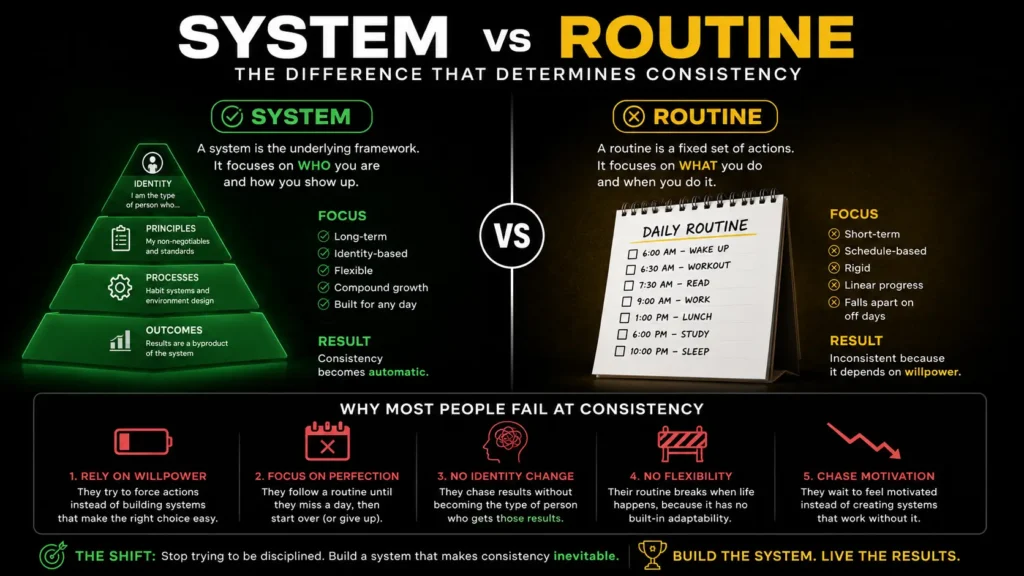
A routine is something you try to follow based on your daily plan or mood. It works well when you feel motivated, but it quickly falls apart on tough or busy days.
A system, on the other hand, is a setup designed to make the right actions easier and more automatic. It doesn’t rely heavily on motivation. Instead, it shapes your environment and processes so that good habits become the default choice rather than a daily struggle.
Understanding this system vs routine difference can explain why some people make steady progress while others keep starting over.
Why Goals Alone Are Not Enough
Many people believe that setting a clear goal is the most important step. They write it down, put it on their wall, or save it in their phone. But the system vs routine difference becomes clear when you realize that a goal only tells you where you want to go — it doesn’t help you get there.
A goal is in the future. Life, however, happens today — in the small moments and daily decisions. Without a proper system, most goals remain dreams. You still face the same challenges: low motivation, distractions, and days when you simply don’t feel like doing the work.
The Problem with Relying Only on Motivation
This is where the system vs routine difference matters most. A routine usually depends on how you feel. On days when motivation is high, you follow through. But when motivation drops — which happens to everyone — the routine breaks.
A good system doesn’t wait for motivation. It works even when you feel tired, lazy, or distracted. For example, someone who wants to get fit may have a strong goal, but if their kitchen is full of junk food and their phone is the first thing they see in the morning, their environment works against them.
Systems remove the need for constant willpower by making good habits easier and bad habits harder.
How Systems Reduce Decision Fatigue
Every day, your brain makes thousands of small decisions. Each one takes mental energy. A strong system reduces these decisions by creating an environment where the right choice becomes the easiest choice.
When you design your surroundings properly, you don’t have to fight yourself every single day. The system does much of the heavy lifting. This is why some people seem to make progress even on low-motivation days, while others with big goals stay stuck.
System vs Routine Difference: Why Most People Misunderstand Systems
The system vs routine difference becomes even clearer when you look at how most people approach building habits. When they hear the word “system,” they immediately imagine a strict, rigid timetable — waking up at 5 AM, following a minute-by-minute schedule, and feeling guilty if they miss even one day.
This is not a system. This is pressure. And pressure rarely lasts long.
Routine Depends on Mood, System Depends on Environment
A routine is mood-based. When you feel motivated and energetic, you follow your routine easily. But when you feel tired, stressed, or unmotivated, the routine breaks, and guilt follows.
A system works differently. It is environment-based. Instead of forcing you to feel motivated, a good system shapes your surroundings so the right action becomes the easiest action. It removes friction from good habits and adds friction to bad ones. This is the core system vs routine difference that most people miss.
The Real Purpose of a System
The real purpose of a system is not to control you or make your life strict. Its job is to make the right choices easier and the wrong choices harder.
For example, if your phone is not visible during work time, you don’t need to use willpower to avoid scrolling. If junk food isn’t in the house, you don’t need to constantly fight the urge to eat it. A well-designed system reduces daily decision fatigue and makes consistency feel natural rather than forced.
System vs Routine Difference: Environment vs Willpower
The system vs routine difference becomes most obvious when you look at how your environment influences your behavior. Most people try to use willpower and motivation to follow their routines. But willpower is limited and gets exhausted quickly.
A good system works by designing your environment so that good habits become easier and bad habits become harder. For example, if you want to eat healthier, keeping junk food out of the house removes the constant need for self-control. The right choice becomes the default choice.
How Systems Make Good Habits Automatic
This is where the system vs routine difference truly shines. A routine asks you to be motivated every single day. A system removes the need for daily motivation by shaping your surroundings and triggers.
When the right action is made easier — such as placing your workout clothes next to your bed or keeping a book on your desk — you don’t have to fight yourself. The environment gently pushes you toward the desired behavior. Over time, these small environmental changes compound and create consistent results without draining your mental energy.
Why Small Actions Matter More Than Big Motivation
Many people fail because they try to start too big. They create ambitious routines that feel overwhelming. A smart system starts very small — so small that it’s almost impossible to fail.
The goal is not immediate perfection. The goal is to create a system that keeps you moving forward even on bad days. When the action is tiny, your brain doesn’t see it as a threat. This makes it much easier to repeat daily and build real consistency.
How Triggers Make Your System More Powerful
The system vs routine difference becomes even clearer when you understand the role of triggers. A trigger is a simple signal that tells your brain it’s time to take action. Without a clear trigger, even the best intentions often get delayed or forgotten.
Good triggers use things you already do daily. For example, after brushing your teeth, you do a short stretch, or after closing your laptop, you read for five minutes. These small connections turn new habits into automatic behaviors. Unlike routines that rely on motivation, systems use triggers to reduce decision-making and make starting effortless.
Why Starting Small Is the Secret to Long-Term Success
Many people fail because they try to change too much at once. They create big, ambitious routines that feel overwhelming. A smart system starts very small — so small that skipping it feels harder than doing it.
For instance, instead of “I will exercise for one hour,” the system starts with “I will put on my workout shoes.” This tiny action removes mental resistance. Once you begin, you often continue naturally. Small actions build momentum and confidence without burning you out.
Handling Bad Days Without Guilt
The system vs routine difference is most valuable on bad days. A routine breaks easily when motivation is low, leaving you feeling guilty. A good system expects bad days and plans for them.
On difficult days, you simply do the minimum version of your habit. The goal is never zero. Even a tiny action keeps the system alive. There is no punishment or self-blame. This forgiving approach prevents the “all or nothing” thinking that destroys most routines and helps you stay consistent for the long term.
How Systems Change Your Identity Over Time
The system vs routine difference goes far beyond daily habits. Over time, a good system doesn’t just help you complete tasks — it gradually changes how you see yourself.
You stop saying “I’m trying to be consistent” and start believing “This is who I am.” Small, repeated actions create proof that builds a new identity. Systems make this transformation natural instead of forced.
Why Systems Win in the Long Run
Systems are built to survive bad days, low motivation, and busy periods. They don’t demand perfection. They simply ask you to keep the chain alive, even if some days are minimal. This forgiving nature prevents the all-or-nothing thinking that destroys most routines.
When you design your environment, use smart triggers, and start small, consistency stops feeling like a daily battle. It becomes your new normal.
FAQ – People Also Ask
Q1: What is the main difference between a system and a routine?
A routine depends on your mood and motivation, so it breaks easily. A system is built around your environment and triggers, making good habits easier and more automatic even on low-energy days.
Q2: Why do my routines always fail after a few days?
Routines rely on willpower and motivation, which naturally fluctuate. Systems remove the need for constant motivation by changing your surroundings and making the right action the easiest one.
Q3: How do I start building a good system?
Start very small. Focus on designing your environment, adding clear triggers, and making the first action so easy you can’t say no. Consistency matters more than intensity.
Q4: Can systems work even if I have low willpower?
Yes. That’s actually when systems work best. They reduce the need for willpower by shaping your environment so good habits happen more naturally.
Q5: How long does it take for a system to show results?
You’ll notice small improvements within a few weeks, but the real identity shift and lasting change usually appear after 2 to 3 months of consistent use.
Final Thoughts
The system vs routine difference comes down to one simple truth: routines fight against human nature, while systems work with it. Goals tell you where you want to go, but systems show you how to get there — even on days when motivation disappears.
Instead of trying to become a highly disciplined person, focus on building smart systems that make discipline unnecessary. Design your environment, use powerful triggers, start small, and remove guilt. Over time, these small changes compound into big results and a new, stronger identity.
Start today with just one small improvement to your environment or one clear trigger. The path to consistency isn’t about working harder — it’s about building a better system.