
In the hyper-saturated digital landscape of 2026, traditional visual-only marketing frameworks are crashing against a wall of consumer blindness. To break through this cognitive fatigue, modern experience designers, neurologists, and conversion rate specialists are turning to sensory immersion to build deep, unshakeable neural pathways between consumers and products. By definition, sensory immersion represents the intentional orchestration of a multi-sensory environment—combining auditory, olfactory, tactile, visual, and sometimes gustatory stimuli—to manipulate human attention, extend emotional dwell times, and accelerate underlying buying choices. When executed systematically, this approach shifts an interaction from a cold, superficial transaction into a living, unforgettable physical or digital space.
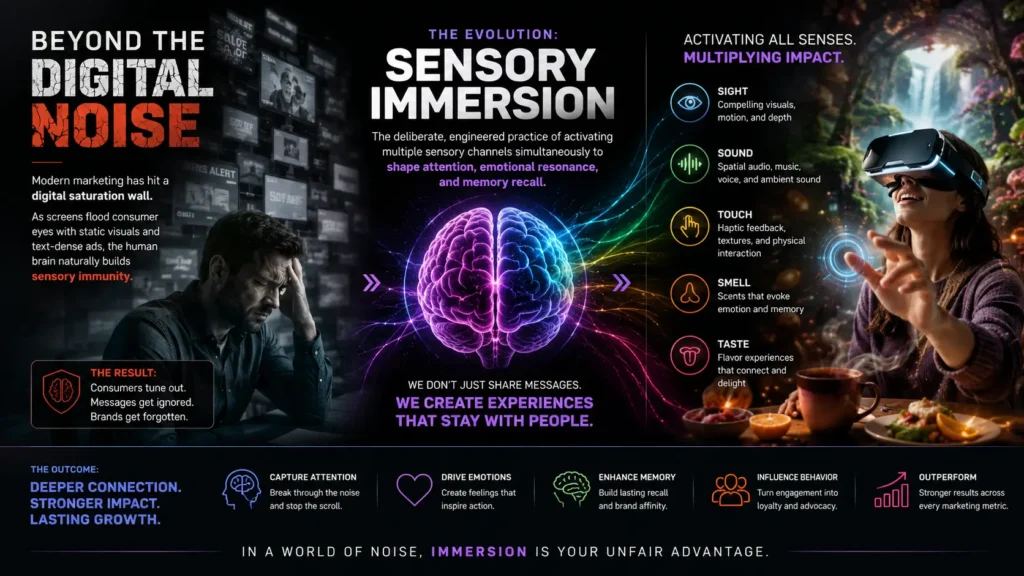
At its psychological core, the human perception engine does not experience reality in isolated, single-channel feeds. Instead, our minds constantly cross-reference multiple streams of ambient data to form a cohesive picture of safety, luxury, and value. For example, a consumer standing in an environment built around the principles of sensory immersion is simultaneously receiving lighting temperatures, sound wave frequencies, and microscopic scent compounds. If these items are aligned with precision, they bypass the critical, skeptical layers of the conscious brain. This allows brand strategists to cultivate deep, instinctual consumer loyalty before the user ever reads a line of product descriptions or features.
The Neurological Foundations of Multi-Sensory Brand Experiences
To design a high-converting physical or digital space, you must first master the biological infrastructure that underpins sensory immersion. Every single touchpoint your customer encounters acts as an electrical impulse traveling toward specific sectors of the brain. When a brand deploys a coordinated layout, it activates memory encoding and retrieval mechanics. This structural process ensures that memories tied to multiple human nodes are far more durable than those built on vision alone. This biological reality forms the backbone of tactical brand architectures worldwide.
Consider the unique biological pathways of human smell. The human olfactory bulb maintains a direct connection to the amygdala and the limbic system, which serve as the brain’s emotional and memory control hubs. While visual and text-based inputs must travel through complex cognitive filters, an authentic aroma experience skips intellectual checkpoints entirely, lowering stress levels and boosting split-second feelings of comfort. When a brand strategically pairs a signature scent with ambient low-frequency soundscapes, it fundamentally alters the visitor’s perception of time and space, creating a deep pocket of sensory immersion that lowers resistance to premium price tags.
This deep alignment drives three critical behavioral shifts across all commerce formats:
- Attention Amplification: Visual elements spark initial interest, but ambient auditory layers anchor the gaze, keeping eyes locked on high-margin products.
- Perceived Product Value: Tactile weight variations and surface textures naturally convince the brain that an item is premium, softening pricing friction.
- Reduced Mental Distance: Rich, multi-sensory environmental textures make distant or digital spaces feel concrete and immediate, shortening the path to transaction.
The Device Divide: Executing Digital Sensory Design Frameworks for Websites
A critical structural mistake in legacy conversion copywriting is the assumption that sensory immersion belongs solely to physical storefronts, luxury wellness retreats, or physical escape rooms. This outdated perspective leaves a wide open organic opportunity for modern brands to implement a structured digital sensory design framework for websites. By engineering user experiences that break through the flat glass of consumer devices, forward-thinking web designers are finding creative ways to evoke physical touchpoints online.
By combining smooth CSS animations, high-fidelity audio, and targeted sensory storytelling techniques in copywriting, standard desktop or mobile screens can project true dimensional depth. When a user scrolls over an active product layout and encounters subtle visual friction or fluid micro-movements, the brain registers hyper tactility. This micro-interaction successfully mimics the physical feeling of touching fine silks or handling heavy-grain stationery.
Furthermore, introducing intentional haptic feedback in product packaging design and showcasing crisp unboxing experiences online fires up the consumer’s mirror neurons. Even though the customer is looking at an isolated digital display, they can mentally feel the snap of a heavy box lid or the texture of a matte finish. This mental mirroring triggers a dopamine release linked to the endowment effect, sparking a deep sense of psychological ownership that confirms the buying choice long before the product arrives at their door.
Actionable Methods for Multi-Sensory Space Optimization
To protect an audience from sensory pollution, developers must approach sensory immersion with structural discipline. The defining rule of this strategy is total sensory congruence: every scent molecule, sound wave, and lighting variable must reinforce a singular brand narrative.
If a digital store or luxury boutique accidentally matches an upbeat, high-tempo acoustic track with a warm, relaxing wood-based scent, the consumer’s mind encounters cognitive dissonance. This conflicting sensory information triggers subconscious alarm bells, causing online bounce rates to spike and average checkouts to drop.
When building out your strategic sensory integration matrix, segment your space by target behavior profiles:
- The High-Energy Impulse Profile: Perfect for quick retail updates or limited product drops. This style blends bright visual accents, crisp citrus notes, and energetic sound tempos. This combination creates an immediate sense of urgency, driving quick decisions and fueling impulse buying behavior.
- The Low-Intensity Experiential Profile: Tailored for premium consulting spaces, enterprise platforms, and luxury hospitality spaces. This approach favors warm lighting, deep, rich material surfaces, and quiet acoustic layers to reduce baseline friction, extend consumer dwell times, and build trust.
Bridging the Structural Gaps in Corporate and Academic Frameworks
Reviewing standard corporate design textbooks and academic tech journals reveals a massive operational divide. Academic research papers consistently view sensory immersion through a costly, hardware-dependent lens. These institutional projects lean heavily on multi-million dollar virtual reality headsets, custom mechanical motion rigs, and elaborate software architecture models meant to support a multi-sensory virtual environment for remote teams. While highly innovative, these high-cost configurations provide little value to growing independent brands or mid-market digital stores.
Conversely, basic B2C marketing articles often reduce sensory branding to thin, surface-level advice—like telling store owners to play popular music or light basic candles. They provide no data-backed formulas to track real business performance.
To clear this structural hurdle, brands must treat sensory assets as direct optimization inputs. By setting up clean split-tests—such as measuring store traffic retention with and without a portable aromatherapy diffuser active, or monitoring conversion shifts after applying descriptive text patterns—operators can connect their investments in sensory immersion straight to core revenue metrics.
Frequently Asked Questions (People Also Ask)
1. What is sensory immersion in the context of modern brand strategy?
It is the systematic use of environmental and digital triggers to engage sight, sound, smell, taste, and touch together. This practice builds memorable experiences, balances consumer emotions, and boosts checkout metrics.
2. How does sensory immersion influence impulse buying behavior?
Multi-sensory cues connect directly with the human limbic system, bypassing conscious filters. This moves consumers from logical thinking to emotional engagement, accelerating unplanned purchases.
3. Can digital storefronts deploy sensory immersion tactics?
Yes. Digital brands can simulate real physical sensations by using vivid descriptive copy, high-fidelity unboxing videos, fluid micro-interactions, and visual weight adjustments within their website interfaces.
4. What role does haptic feedback play in consumer product packaging?
Tactile feedback uses physical materials, custom paper weights, and mechanical closures (like magnetic seals) to signal luxury, validating the buyer’s investment early on.
5. How can a business design a high-quality retail soundscape on a budget?
A store can compile custom acoustic tracks balanced around target movement tempos. Utilizing smart speaker systems allows for proper sound distribution without needing industrial-grade renovations.
6. What elements define a comprehensive sensory brand identity?
It is an expanded branding blueprint that documents specific audio frequencies, packaging textures, signature scents, and lighting setups alongside traditional visual parameters like logos and fonts.
7. Why do conflicting multi-sensory environments increase bounce rates?
This occurs due to sensory pollution or mismatched inputs. When a brand’s acoustic rhythm clashes with its underlying visual style, consumers experience immediate cognitive friction and choose to leave.
8. Why does scent marketing hold such a strong connection to human memory?
The olfactory bulb links directly to the amygdala and hippocampus. This direct pathway makes smell the most potent human trigger for long-term emotional recall and brand association.
9. What are effective sensory marketing examples for small business retail?
Practical methods include calibrating lighting temperatures to your target customer profiles, utilizing micro-dosed ambient diffusers, and matching background music tempos to your ideal store dwell times.
10. How can companies track the financial ROI of sensory immersion updates?
Brands can implement clean geographical split-tests, measuring variables like dwell duration, average ticket sizes, and return rates between optimized spaces and non-optimized control environments.
11. What is the definition of hyper tactility in modern web layout design?
It is a cutting-edge UX practice that uses shadow layers, parallax movements, and textures to make flat digital interface elements appear remarkably dimensional and touchable.
12. How does background acoustic pacing affect restaurant consumer metrics?
High-tempo music accelerates customer turnover in casual dining environments. On the flip side, lower frequencies invite premium guests to relax, boosting dessert and specialty drink sales.
13. What key errors should brands avoid when introducing custom ambient scents?
Avoid synthetic fragrances that can trigger sensitivities, and make sure aroma molecule counts stay low. The goal is to create a subtle ambient backdrop rather than overwhelming your visitors.
14. What are sensory storytelling techniques in modern content copywriting?
This methodology replaces generic marketing fluff with sensory-rich descriptors and active verbs that trigger physical memories, making digital products feel tangible to the reader.
15. How do warm lighting profiles affect premium luxury consumers?
Warm lighting naturally reduces ambient anxiety, prompts a slower walking pace, and encourages buyers to spend more time exploring high-ticket merchandise displays.
16. What is a multi-sensory virtual decision-making center?
It is an advanced enterprise collaboration framework that uses virtual reality systems, spatial audio, and haptic devices so distributed teams can analyze complex datasets together.
17. How does the endowment effect connect to online unboxing content?
Watching premium unboxing media allows viewers to mentally rehearse the tactile experience of opening a product. This psychological projection builds a sense of personal ownership, accelerating the buy choice.
18. Why should companies avoid running generic background playlists?
Generic playlists lack strategic tempo planning and often include conflicting emotional hooks. This randomness fractures the user experience and damages overall brand authority.
19. Can sensory integration frameworks improve wellness space environments?
Yes. Blending natural plant diffusers, textured surfaces, and grounding low-frequency acoustics calms the nervous system and helps visitors feel relaxed and safe.
20. How should teams plan for individual sensory sensitivities during design?
Ensure spaces maintain balanced physical accessibility. Avoid harsh flashing lights, sudden audio jumps, or intense synthetic chemical aromas to keep environments safe and welcoming for all visitors.
Strategic Summary and Implementation Roadmap
Ultimately, sensory immersion is not a superficial design trend; it is a conversion architecture built in harmony with human physiology. Brands that continue to rely on flat visual displays will face escalating ad fatigue and dropping consumer retention metrics. To establish lasting market authority, businesses must treat multi-sensory touchpoints as essential infrastructure pieces.
The road to building a high-converting presence starts with a clear assessment of your current customer journey. Begin by optimizing your highest-impact spaces: integrate detailed, sensory-rich copywriting across your main landing pages, upgrade your packaging to maximize tactile textures, and align your environments with cohesive acoustic tracks. If you are ready to scale your market authority, center your next product cycle on creating a unified identity system that transforms simple transactions into deep, unforgettable moments of sensory immersion.